Creating a Playscript in BSL
Research questions:
How do we make theatre in British Sign Language, and what is the learning process needed to support a full commission in BSL?
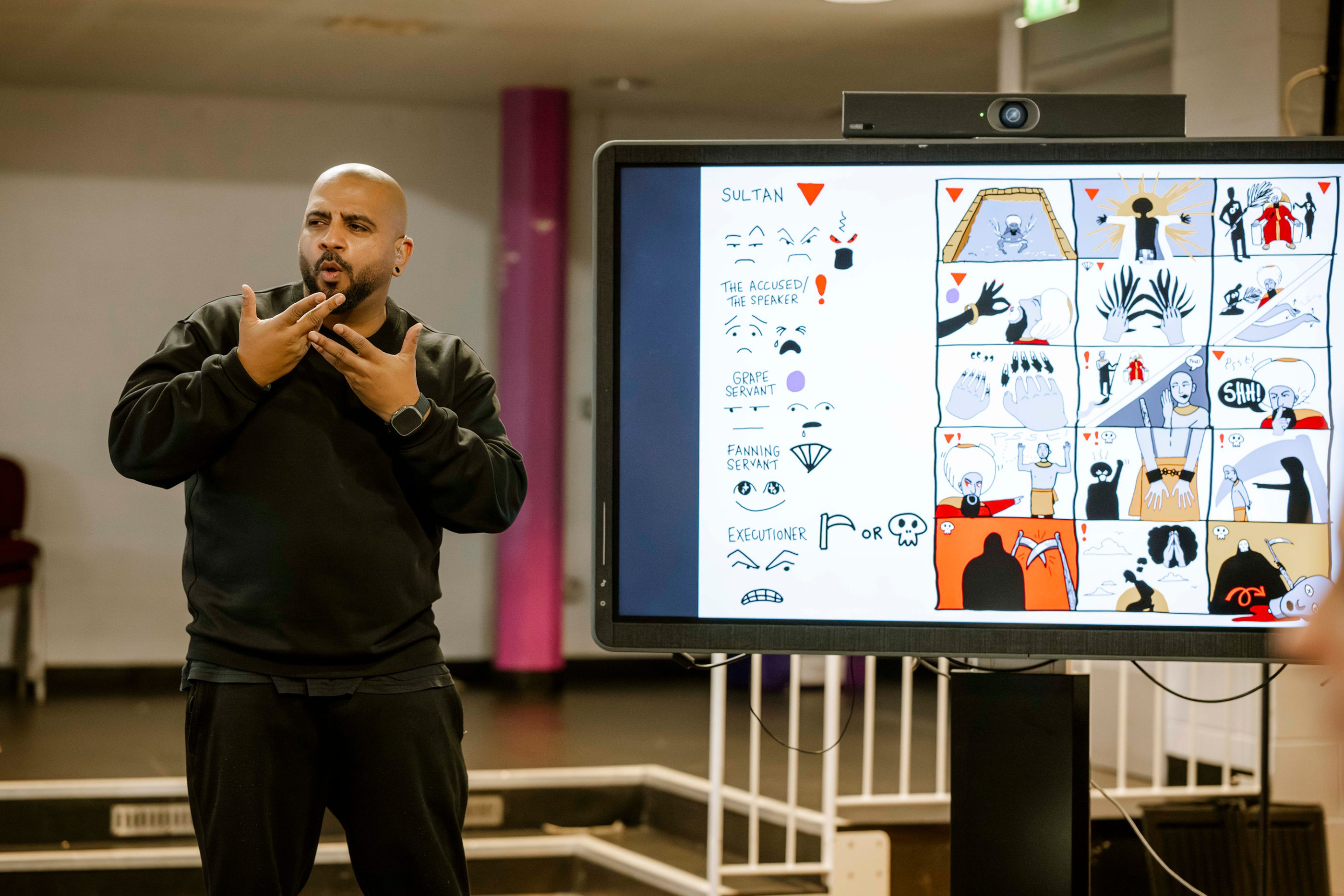
How do we write and record a playscript conceived entirely in BSL?
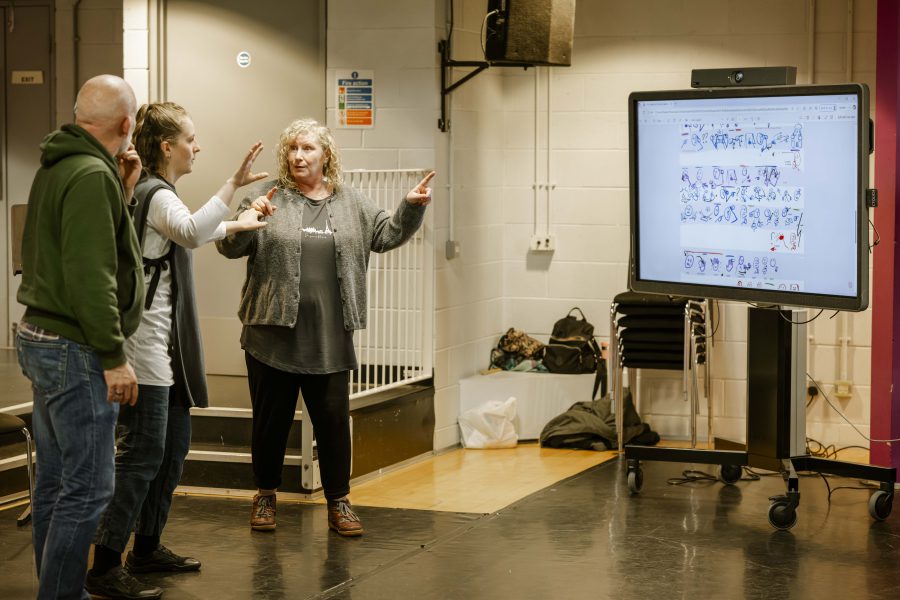
The VX Lab – Creating a Playscript in BSL took place in autumn 2025 at Sheffield Theatres.
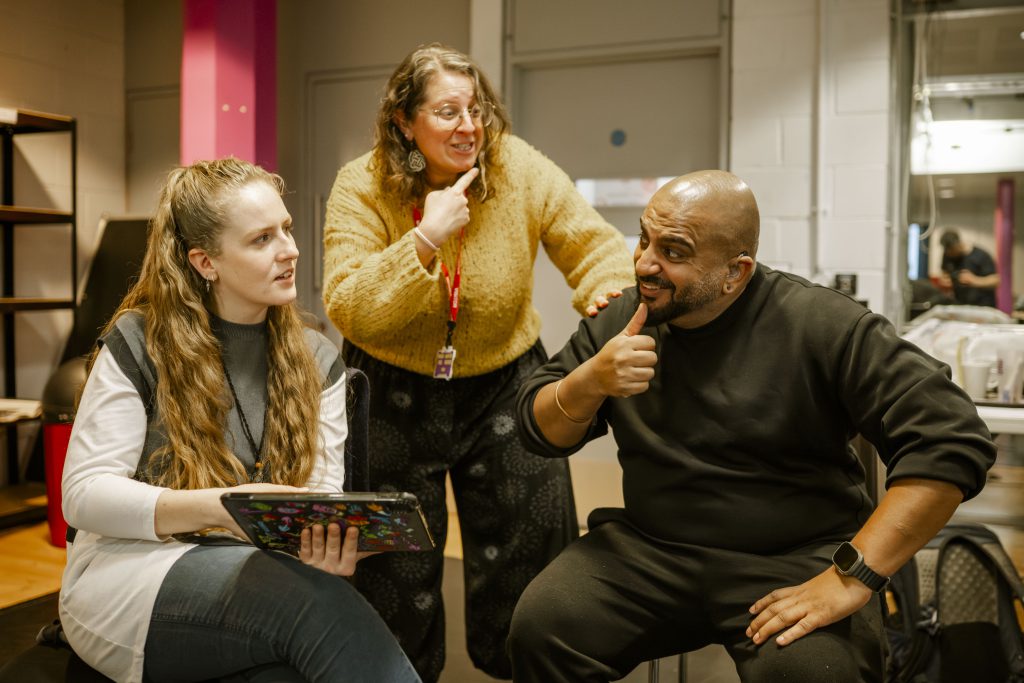
We invited Deaf artists and creatives to work together over a week in Sheffield. They experimented and tested a variety of approaches in response to the research questions.
The ambition for the week was to create a script in BSL, recognising the innate creativity of this beautiful language.
The Lab was delivered in partnership with Sheffield Theatres.
What did we learn?
The Lab revealed that the original question — how to write and record a script in BSL — was rooted in a hearing-led, text-based framework that did not fully reflect the embodied and spatial nature of BSL.
The most significant learning was therefore a reframing of the task: BSL theatre is not simply written but composed or choreographed in four dimensions. Creating space for BSL-led composition is not simply about access provision; it is about linguistic legitimacy and artistic equity.
The process did not produce a definitive scripting system. It established the foundations of a methodology and demonstrating that scripting BSL is both possible and artistically necessary.