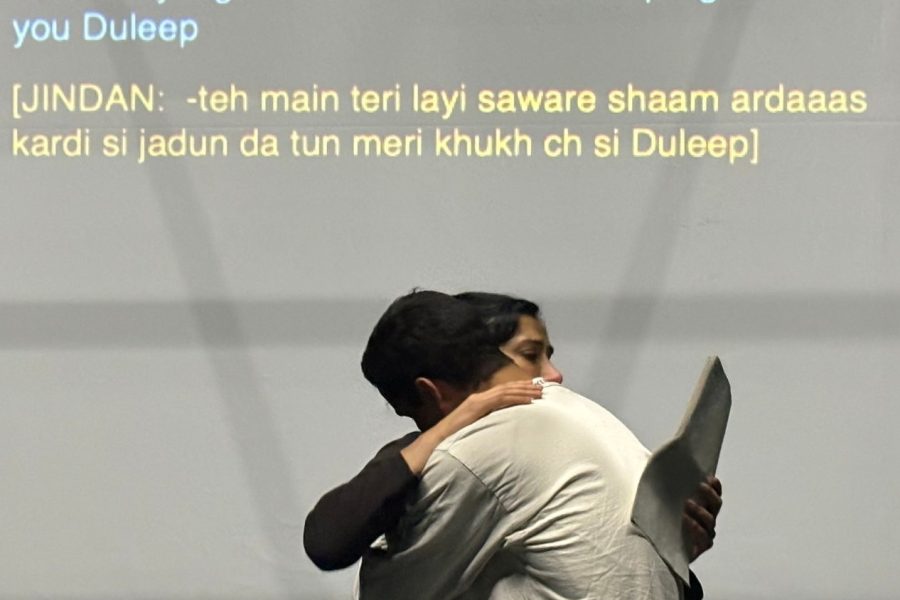
Puppetry and Disability
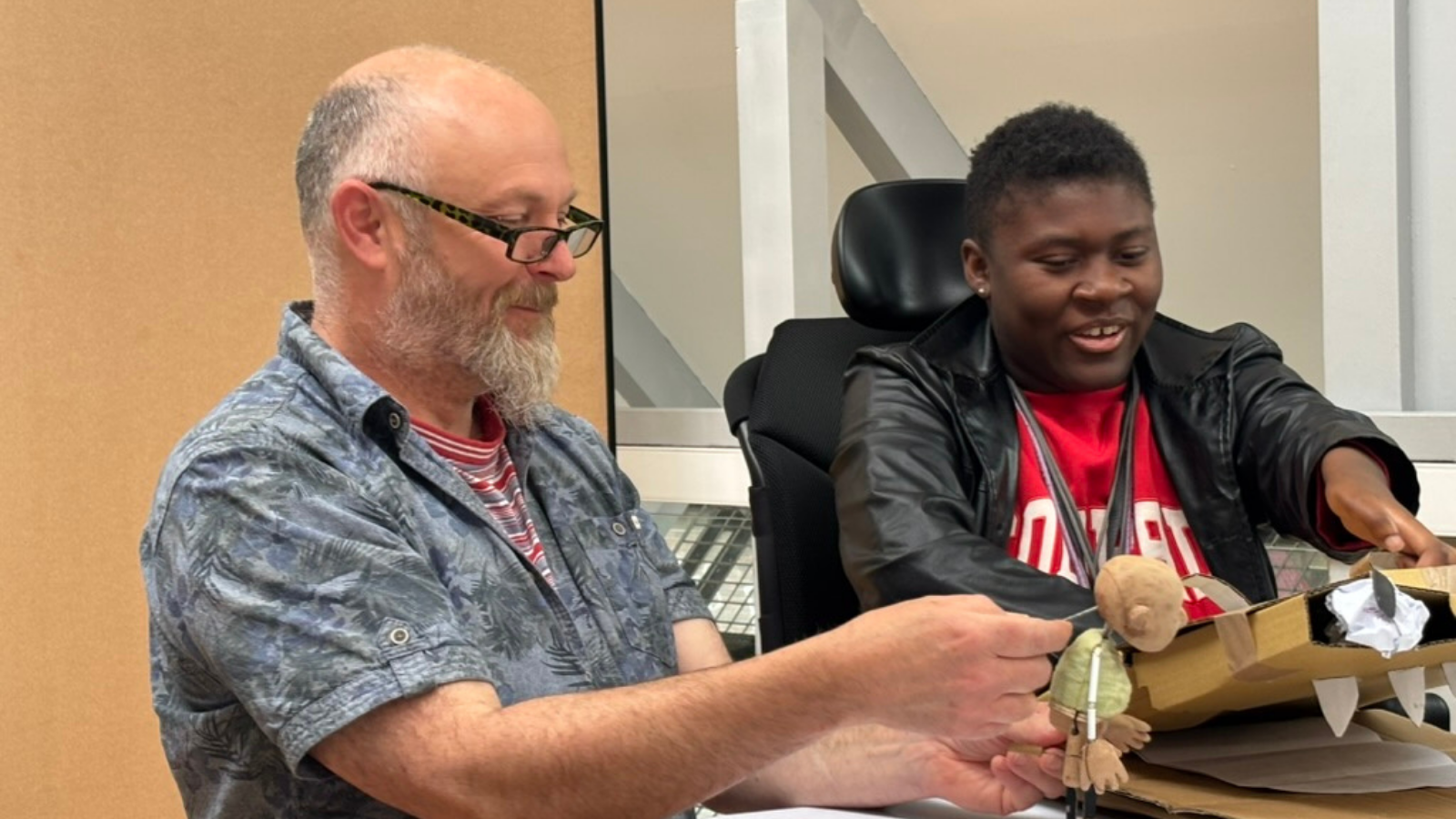
How does puppetry adapt to different people and how do these adaptations enhance storytelling in theatre?
The Lab grew out of an earlier R&D week on one of our commissioned plays. We became interested in how disabled artists might reshape the artform itself: challenging ideas around movement, embodiment and the relationship between body and object on stage.
The focus was not on accessibility as a provision, but as a source of artistic innovation.
An array of creatives collaborated in this Lab: Lee Philips, Simi Roach, Ciaran Steward, Jasmine Thien and Ellie Walwork. The Lab’s co-leads were Nikki Charlesworth and Marc Parrett, puppetry artists
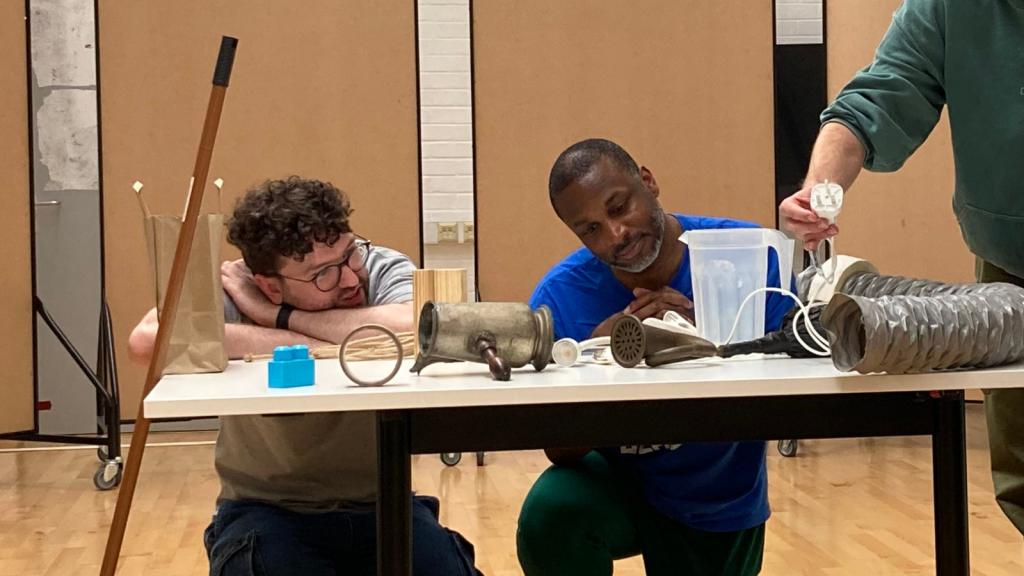
The aim was to unpack the question of how puppetry might evolve through disabled-led practice.
It quickly became clear that puppets and puppetry deliver through a particular set of conventions that apply to their operation and manipulation, such how they are made and how we expect puppets to move.
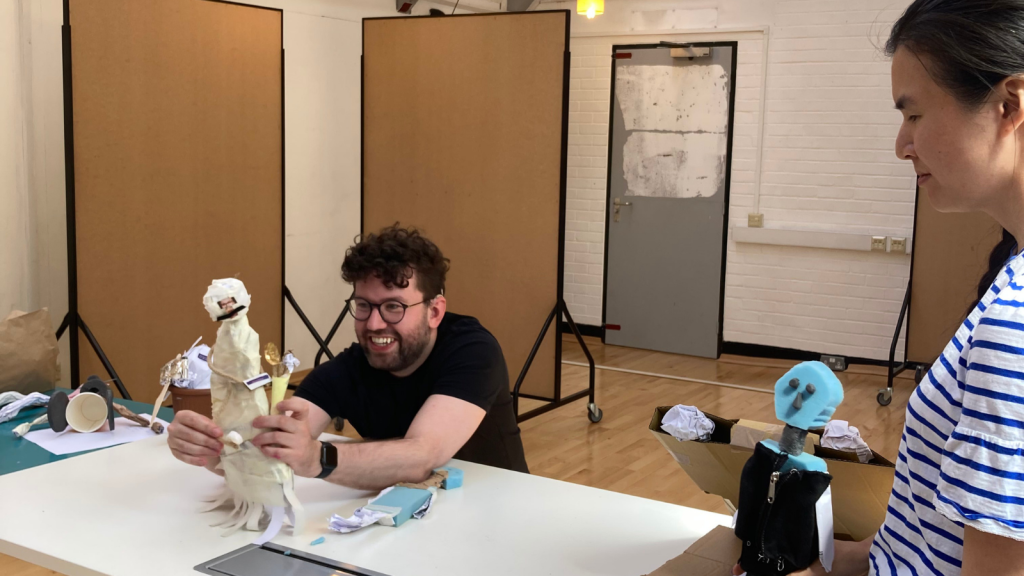
The team interrogated how these conventions actually define the way puppets tell a story. They made their own puppets and invented new ways of animating a puppet. The process revealed new ways of communicating through puppets.
Findings from the Lab will be published in the coming months.
Explore further
Towards a Neurodivergent Dramaturgy
Creating a Playscript in BSL
Inclusive Theatre for and with Children and Young People